Setting the Table for Diplomacy
Marks of Friendship: 250 Years of U.S. Diplomatic Treasures
“[The king’s] visit reminds us of a time when the United States was in great difficulties, great danger … with few friends, and the first of those friends were his predecessor and ancestor … who recognized the United States when others were unwilling to do so.”
—President John F. Kennedy speaking at the State Dinner for Moroccan King Hassan II, March 27, 1963. (Later in the toast, JFK mentions Morocco’s 1821 gift of the Tangier American Legation to the U.S.)
Formal diplomatic negotiations typically take place around a conference table, but often diplomacy is best conducted over a meal. American ambassadors host both diplomatic dinners and small meetings over coffee or tea. These gatherings forge more effective partnerships and bridge differences with foreign dignitaries. From the days of Franklin and Jefferson in Paris and John Adams in London, to the Cold War era of ambassadors George Kennan in Moscow and Shirley Temple Black in Prague, U.S. envoys have entertained in order to influence.
Today, whether the event is a formal dinner, a working lunch, or a cultural occasion, American ambassadors invite their host nation’s political and business leaders, foreign diplomats, and visiting senior U.S. officials to their tables to establish more effective partnerships, promote U.S. policy, and showcase American culture and prosperity.
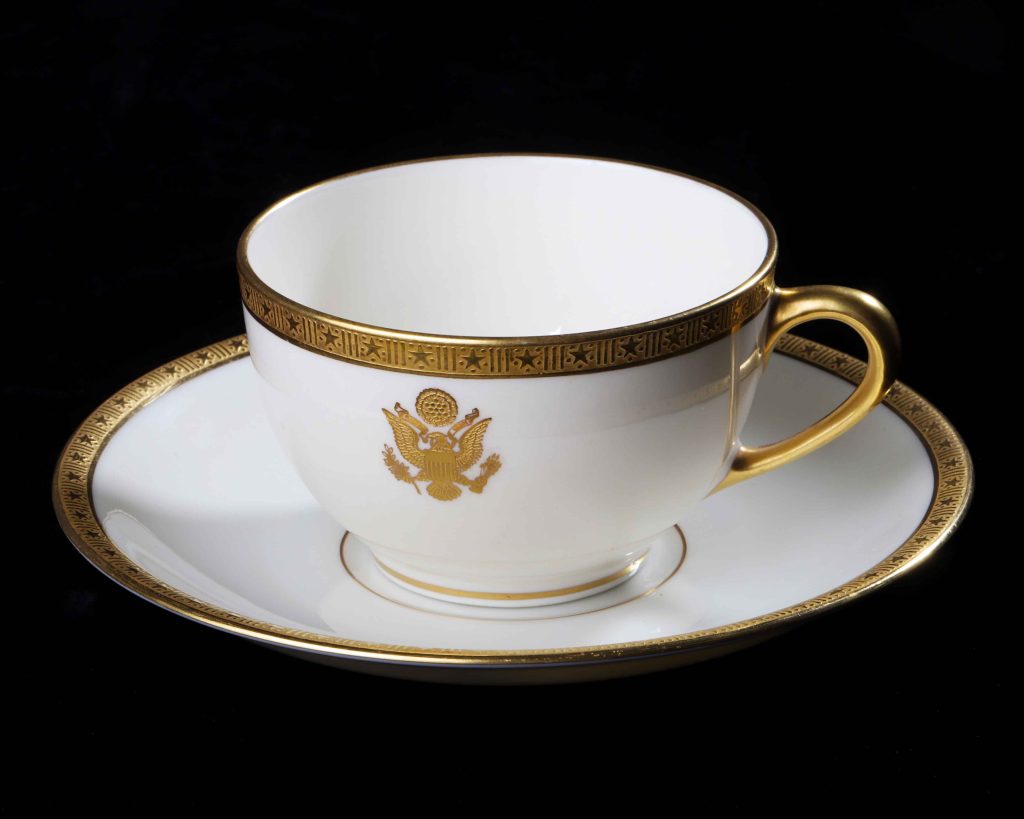
U.S. Embassy Warsaw, Poland
Lenox Corporation
American, founded 1889
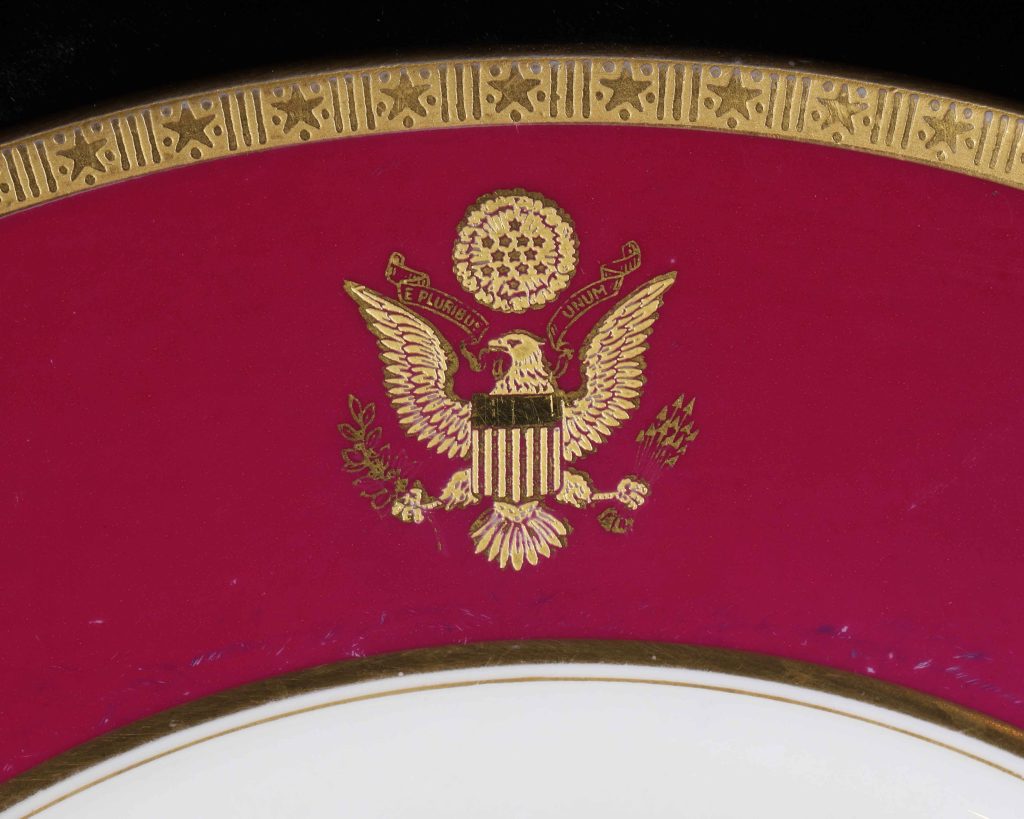
This official china dinnerware dates to 1925, when John B. Stetson, Jr., son of the hatmaker, was appointed by President Calvin Coolidge to serve as U.S. Minister to Poland. He ordered custom-made china dinnerware bearing the American eagle and stamped with his name from the Lenox company of New Jersey. Walter Scott Lenox (1859–1920), a pioneering American inventor, had created bone china rivalling that of Europe. President Woodrow Wilson had ordered Lenox china dinnerware for the White House in 1918––the first American-made presidential china––likely influencing Stetson’s purchase.
Stetson’s chinaware was used by his ambassadorial successors in Warsaw from the Roaring Twenties until the Internet Age, surviving the Nazi occupation and the upheaval of the communist era. The elegant antique china is a reminder that fragile objects, like peace among nations, can be preserved if properly cared for.
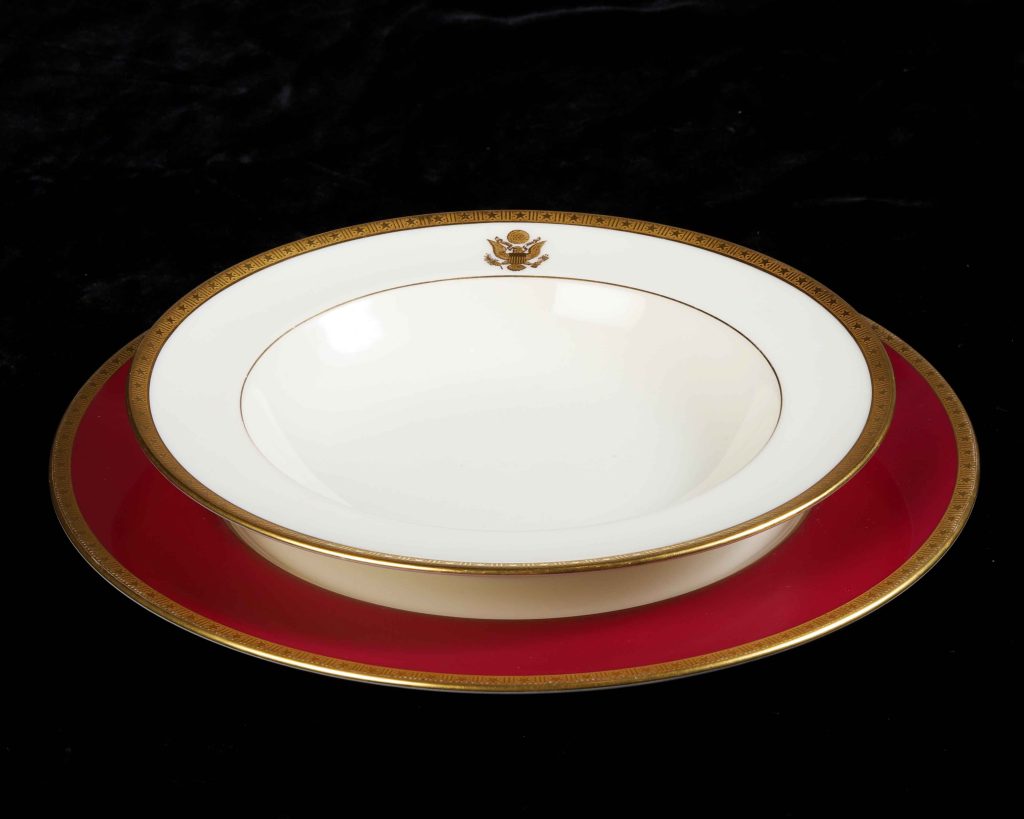
U.S. Embassy Warsaw, Poland
Lenox Corporation
American, founded 1889
This official china dinnerware dates to 1925, when John B. Stetson, Jr., son of the hatmaker, was appointed by President Calvin Coolidge to serve as U.S. Minister to Poland. He ordered custom-made china dinnerware bearing the American eagle and stamped with his name from the Lenox company of New Jersey. Walter Scott Lenox (1859–1920), a pioneering American inventor, had created bone china rivalling that of Europe. President Woodrow Wilson had ordered Lenox china dinnerware for the White House in 1918––the first American-made presidential china––likely influencing Stetson’s purchase.
Stetson’s chinaware was used by his ambassadorial successors in Warsaw from the Roaring Twenties until the Internet Age, surviving the Nazi occupation and the upheaval of the communist era. The elegant antique china is a reminder that fragile objects, like peace among nations, can be preserved if properly cared for.
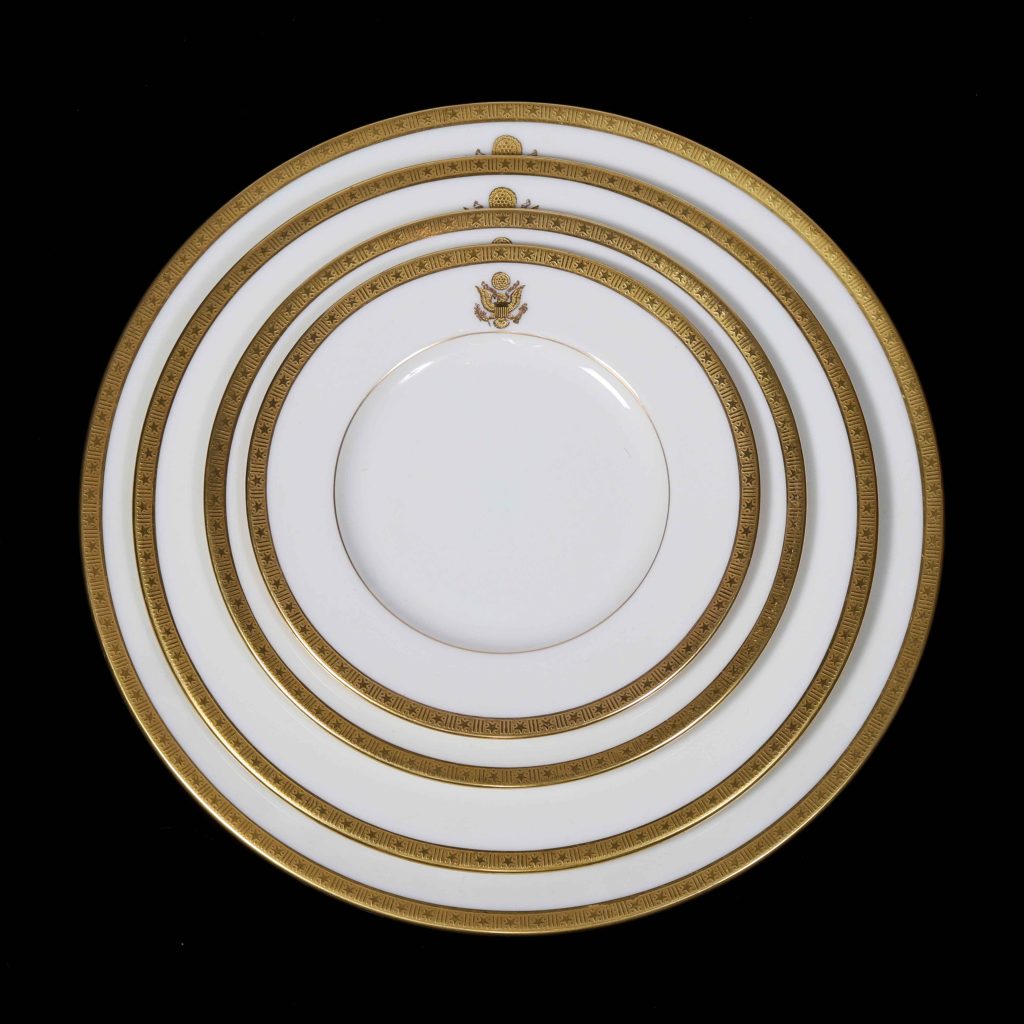
U.S. Embassy Warsaw, Poland
Lenox Corporation
American, founded 1889
This official china dinnerware dates to 1925, when John B. Stetson, Jr., son of the hatmaker, was appointed by President Calvin Coolidge to serve as U.S. Minister to Poland. He ordered custom-made china dinnerware bearing the American eagle and stamped with his name from the Lenox company of New Jersey. Walter Scott Lenox (1859–1920), a pioneering American inventor, had created bone china rivalling that of Europe. President Woodrow Wilson had ordered Lenox china dinnerware for the White House in 1918––the first American-made presidential china––likely influencing Stetson’s purchase.
Stetson’s chinaware was used by his ambassadorial successors in Warsaw from the Roaring Twenties until the Internet Age, surviving the Nazi occupation and the upheaval of the communist era. The elegant antique china is a reminder that fragile objects, like peace among nations, can be preserved if properly cared for.
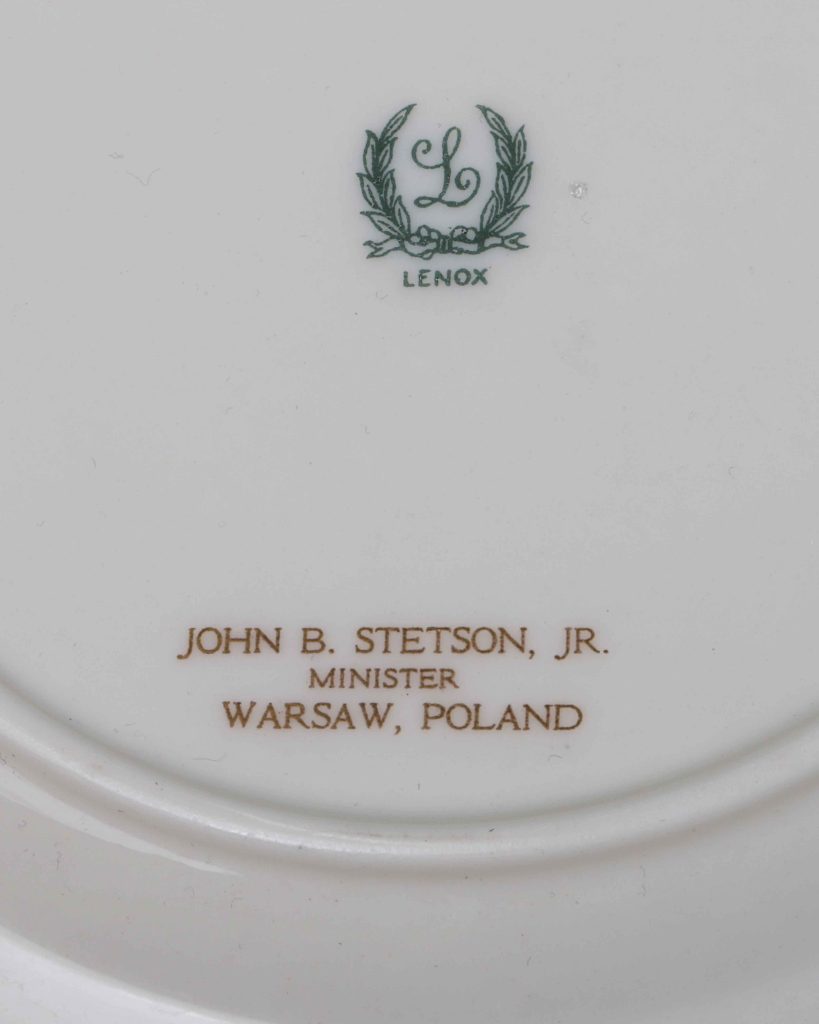
U.S. Embassy Warsaw, Poland
Lenox Corporation
American, founded 1889
This official china dinnerware dates to 1925, when John B. Stetson, Jr., son of the hatmaker, was appointed by President Calvin Coolidge to serve as U.S. Minister to Poland. He ordered custom-made china dinnerware bearing the American eagle and stamped with his name from the Lenox company of New Jersey. Walter Scott Lenox (1859–1920), a pioneering American inventor, had created bone china rivalling that of Europe. President Woodrow Wilson had ordered Lenox china dinnerware for the White House in 1918––the first American-made presidential china––likely influencing Stetson’s purchase.
Stetson’s chinaware was used by his ambassadorial successors in Warsaw from the Roaring Twenties until the Internet Age, surviving the Nazi occupation and the upheaval of the communist era. The elegant antique china is a reminder that fragile objects, like peace among nations, can be preserved if properly cared for.
U.S. Embassy Warsaw, Poland
Lenox Corporation
American, founded 1889
This official china dinnerware dates to 1925, when John B. Stetson, Jr., son of the hatmaker, was appointed by President Calvin Coolidge to serve as U.S. Minister to Poland. He ordered custom-made china dinnerware bearing the American eagle and stamped with his name from the Lenox company of New Jersey. Walter Scott Lenox (1859–1920), a pioneering American inventor, had created bone china rivalling that of Europe. President Woodrow Wilson had ordered Lenox china dinnerware for the White House in 1918––the first American-made presidential china––likely influencing Stetson’s purchase.
Stetson’s chinaware was used by his ambassadorial successors in Warsaw from the Roaring Twenties until the Internet Age, surviving the Nazi occupation and the upheaval of the communist era. The elegant antique china is a reminder that fragile objects, like peace among nations, can be preserved if properly cared for.
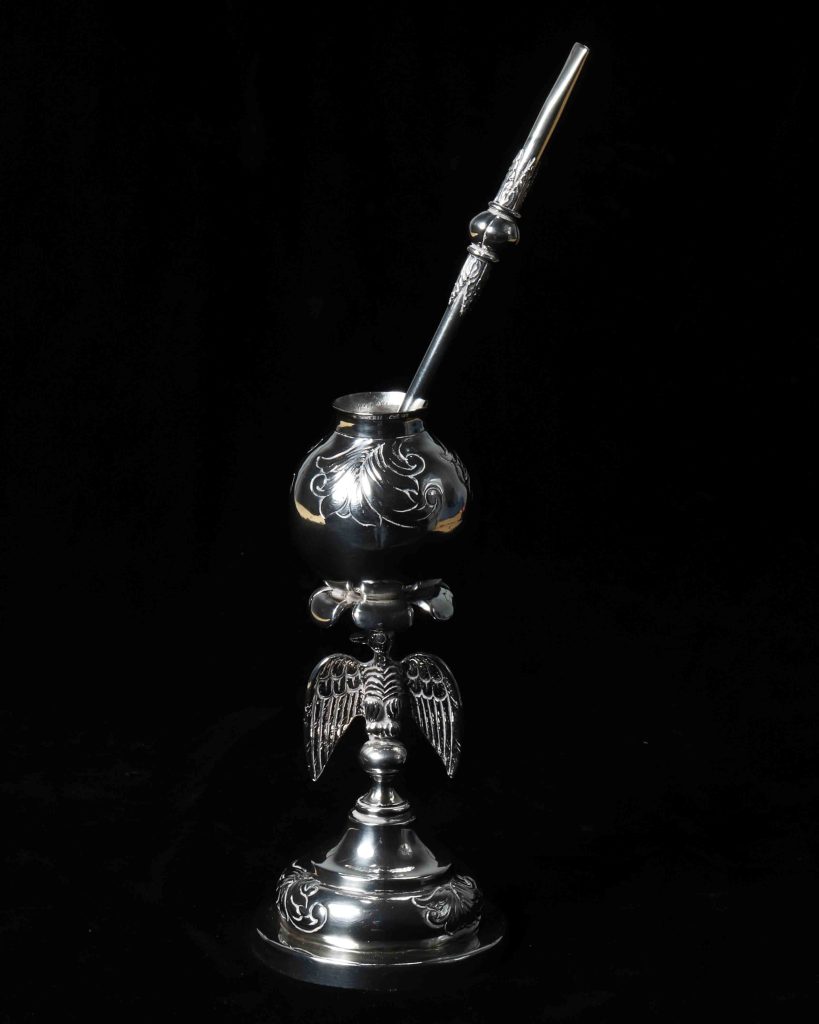
Silver Mate cup and dried gourd with silver straws, circa 1990s
U.S. Embassy Buenos Aires, Argentina
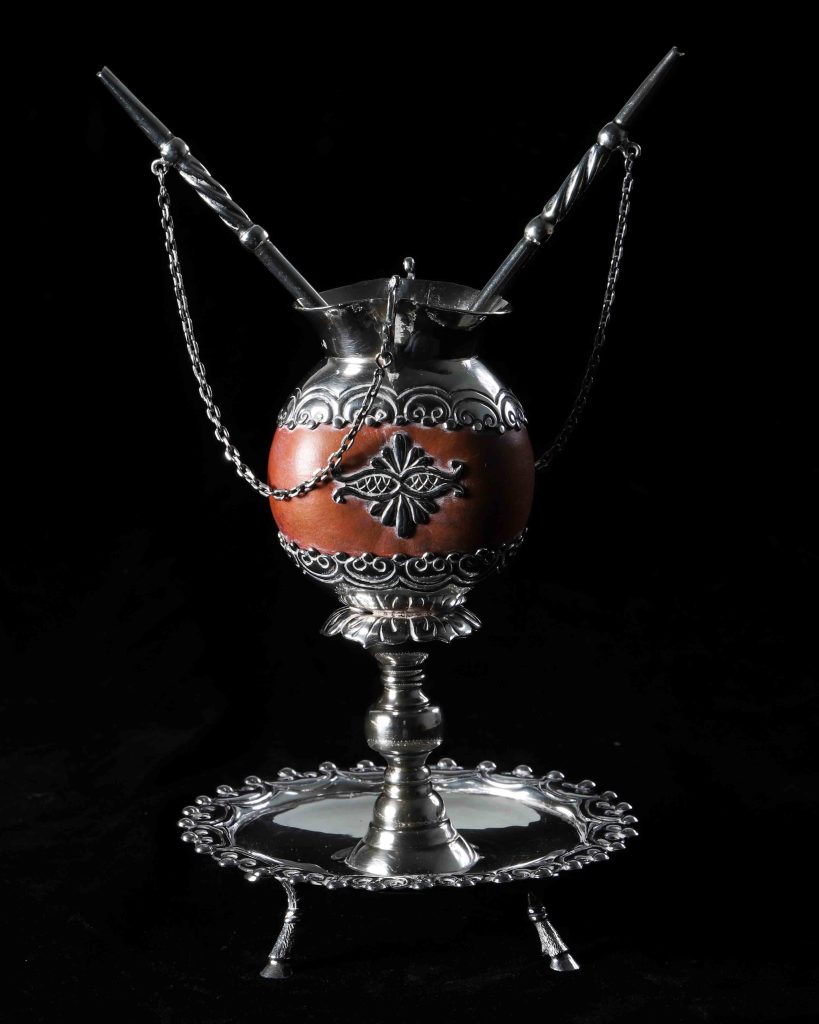
Mate (rhymes with ‘okay’) in Argentina is a traditional, caffeinated herbal infusion made from dried yerba mate leaves and served communally from a shared gourd (the mate) with a bombilla, or metal straw.
The ritual of drinking and sharing tea made from hot water and yerba buena leaves is thousands of years old. It symbolizes friendship, hospitality and national identity and is enjoyed daily by people of all walks of life for energy and social connection. Typically, one person, (the cebador) prepares the mate and passes it around.
The silver mate features an intricately crafted eagle at its base, adding symbolic strength and elegance to its design. The couple’s mate with two bombillas is made from a dried and polished gourd, with decorative silver finishings. A couple’s mate is often given to newlyweds.
No record exists of the provenance of these items, but they were likely a gift, as are many items in the heritage collections of U.S. diplomatic and consular missions.
Silver Mate cup and dried gourd with silver straws, circa 1990s
U.S. Embassy Buenos Aires, Argentina
Mate (rhymes with ‘okay’) in Argentina is a traditional, caffeinated herbal infusion made from dried yerba mate leaves and served communally from a shared gourd (the mate) with a bombilla, or metal straw.
The ritual of drinking and sharing tea made from hot water and yerba buena leaves is thousands of years old. It symbolizes friendship, hospitality and national identity and is enjoyed daily by people of all walks of life for energy and social connection. Typically, one person, (the cebador) prepares the mate and passes it around.
The silver mate features an intricately crafted eagle at its base, adding symbolic strength and elegance to its design. The couple’s mate with two bombillas is made from a dried and polished gourd, with decorative silver finishings. A couple’s mate is often given to newlyweds.
No record exists of the provenance of these items, but they were likely a gift, as are many items in the heritage collections of U.S. diplomatic and consular missions.
![Walnut and upholstered tapestry fabric, circa 1725
U.S. Embassy Prague, Czech Republic
This early-18th century armchair, one of a matching set of six with original tapestry upholstery, depicts didactic tales from the Aesop’s Fables. The chair’s back illustrates the story of “The Eagle and the Fox,” an exhortation to abide by the Golden Rule. The [front?] tells the tale of “The Fox and the Grapes,” counseling honesty rather than self-deception.
Residents and guests in Prague’s Villa Petschek have used these charming chairs at what is now the U.S. Ambassador’s residence in Prague, Czech Republic, for nearly a century. They were purchased in the 1920s by the home’s builder and original owner, wealthy industrialist Otto Petschek. He acquired many antiques from across Europe to furnish his exquisite villa.
This chair and the many other antiques in Villa Petschek have withstood the World War II German, and later Cold War Soviet, occupations, followed by decades of diplomatic events hosted there by U.S. ambassadors to Czechoslovakia, and then the Czech Republic. The antique furnishings, art and objects perform an important diplomatic role, demonstrating that the United States respects and cares for artifacts of cultural and historical value.](https://oboculturalheritage.state.gov/wp-content/uploads/2026/06/18_AesopsArmchair-819x1024.jpg)
U.S. Embassy Prague, Czech Republic
This early-18th century armchair, one of a matching set of six with original tapestry upholstery, depicts didactic tales from the Aesop’s Fables. The chair’s back illustrates the story of “The Eagle and the Fox,” an exhortation to abide by the Golden Rule. The [front?] tells the tale of “The Fox and the Grapes,” counseling honesty rather than self-deception.
Residents and guests in Prague’s Villa Petschek have used these charming chairs at what is now the U.S. Ambassador’s residence in Prague, Czech Republic, for nearly a century. They were purchased in the 1920s by the home’s builder and original owner, wealthy industrialist Otto Petschek. He acquired many antiques from across Europe to furnish his exquisite villa.
This chair and the many other antiques in Villa Petschek have withstood the World War II German, and later Cold War Soviet, occupations, followed by decades of diplomatic events hosted there by U.S. ambassadors to Czechoslovakia, and then the Czech Republic. The antique furnishings, art and objects perform an important diplomatic role, demonstrating that the United States respects and cares for artifacts of cultural and historical value.
U.S. Embassy Prague, Czech Republic
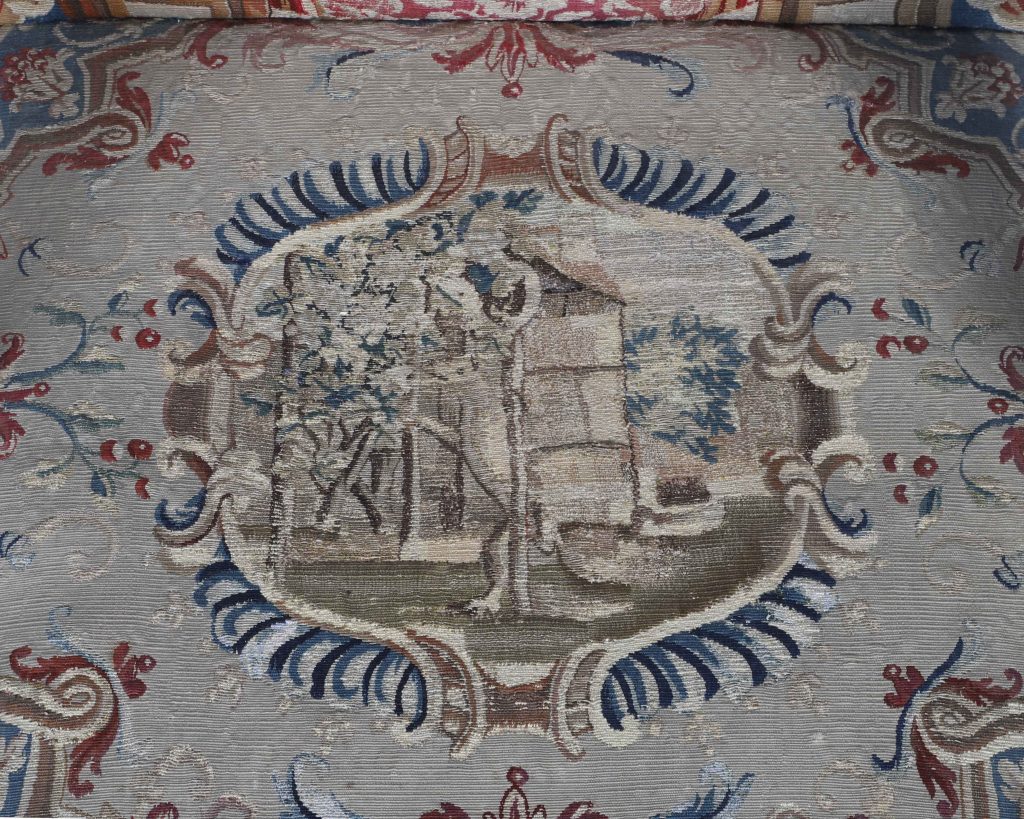
This early-18th century armchair, one of a matching set of six with original tapestry upholstery, depicts didactic tales from the Aesop’s Fables. The chair’s back illustrates the story of “The Eagle and the Fox,” an exhortation to abide by the Golden Rule. The [front?] tells the tale of “The Fox and the Grapes,” counseling honesty rather than self-deception.
Residents and guests in Prague’s Villa Petschek have used these charming chairs at what is now the U.S. Ambassador’s residence in Prague, Czech Republic, for nearly a century. They were purchased in the 1920s by the home’s builder and original owner, wealthy industrialist Otto Petschek. He acquired many antiques from across Europe to furnish his exquisite villa.
This chair and the many other antiques in Villa Petschek have withstood the World War II German, and later Cold War Soviet, occupations, followed by decades of diplomatic events hosted there by U.S. ambassadors to Czechoslovakia, and then the Czech Republic. The antique furnishings, art and objects perform an important diplomatic role, demonstrating that the United States respects and cares for artifacts of cultural and historical value.
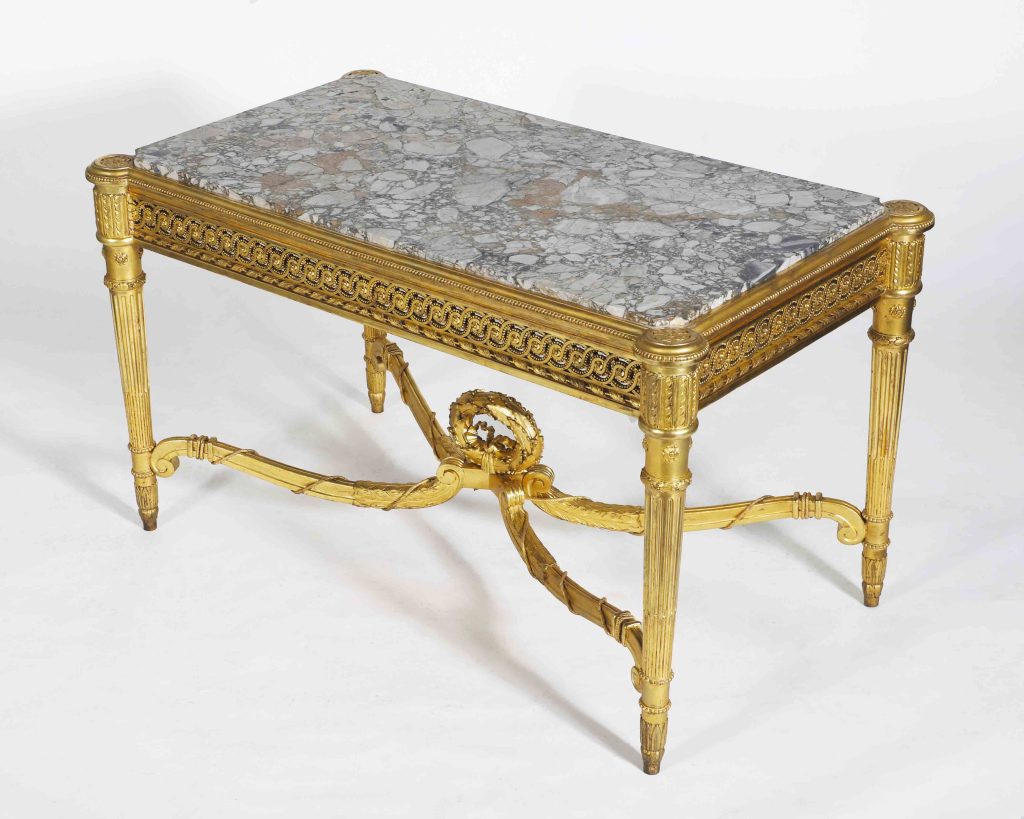
circa late 19th century
U.S. Embassy, Buenos Aires, Argentina
When President Herbert Hoover visited Buenos Aires on a goodwill tour of Latin America in 1928, U.S. Ambassador to Argentina Robert Woods Bliss, tired of living in hotels and rented homes, secured Hoover’s approval to seek a permanent ambassadorial residence. Bliss and his wife Mildred, the proprietors of Dumbarton Oaks in Washington D.C., set their sights on acquiring the magnificent Palacio Bosch, a masterpiece of French classicism. They succeeded in convincing the stately home’s owner and builder, Argentine Foreign Minister Ernesto Bosch, to sell it to the U.S. Government.
Many original furnishings of the Bosch Palace conveyed with the sale, perhaps including this oblong Brescia marble top table. Ernesto Bosch had once been Argentina’s ambassador to France, so it is possible Bosch purchased the table while in Paris.
Whether the elegant table conveyed with the house or was purchased by the wealthy Blisses, it continues to adorn Palacio Bosch’s graceful Music Room, the setting for innumerable diplomatic gatherings over the last century.

OUR NON-PROFIT PARTNER
The Fund to Conserve was established, in 2012, as a 501(c)(3), independent, non-profit, nonpartisan private sector partner to the U.S. Department of State, Overseas Buildings Operations, Office of Cultural Heritage. The purpose of this public-private partnership is to fund – through philanthropic giving – the conservation and preservation of the Department of State’s many properties of cultural and architectural significance, and the heritage collections they house.