A Painting’s Diplomatic Journey
Marks of Friendship: 250 Years of U.S. Diplomatic Treasures
1741
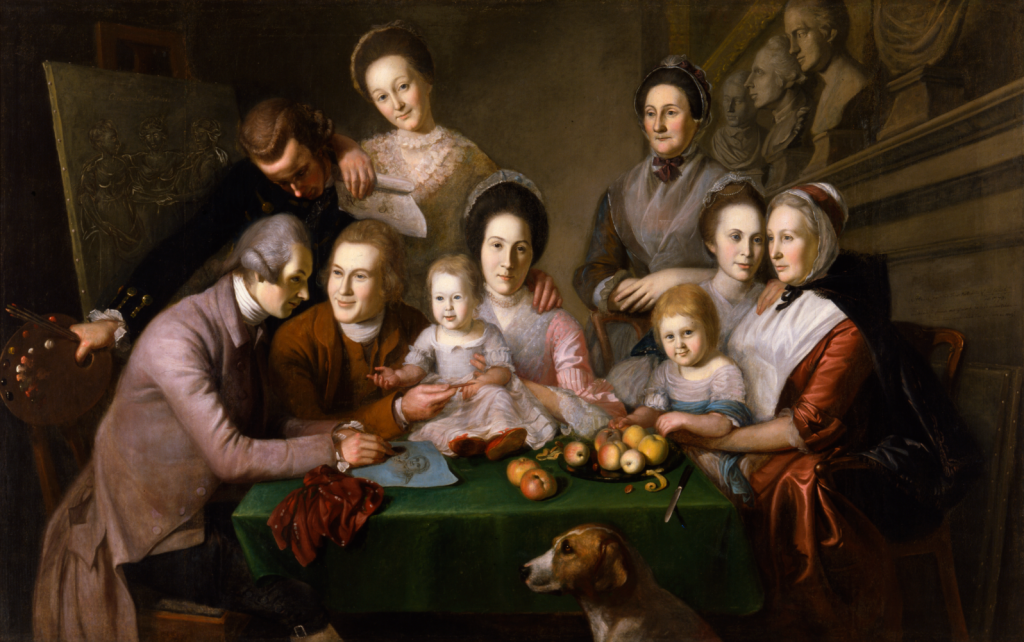
Charles Willson Peale, an American painter and portraitist, is born. In 1775, Peale moves to Philadelphia and opens a painting studio. He joins the Sons of Liberty and later serves in the Continental Army during the American Revolution. After the war, Peale paints dozens of historic figures including many of America’s Founding Fathers. He has sixteen children, many of whom are named after his favorite artists and become noted artists themselves.
1777
George Washington and the Continental Army defeat the British at the Battle of Princeton. Peale serves as a captain in the Continental Army and fights in this battle.
1779
Peale completes the original Washington at Princeton, a portrait commissioned to honor General Washington’s recent military success. While on display in Philadelphia, the portrait is met with public acclaim.
1779
Founding Father Henry Laurens (1724–1792) orders a replica of Washington at Princeton from Peale. The copy is intended as a diplomatic gift for the Dutch, from whom the Americans hope to secure a loan to fund the Revolutionary War effort.
1780
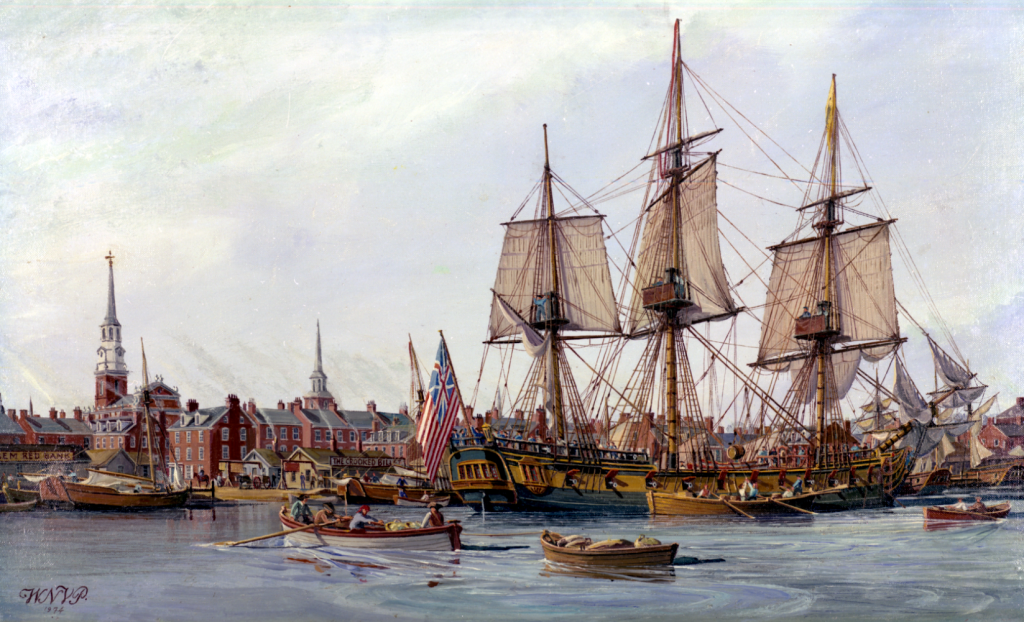
As an envoy of the Continental Congress, Laurens sets sail on the American ship, The Mercury with the portrait and a draft treaty for Dutch consideration. During the voyage, all are captured at sea by British Captain George Keppel of HMS Vestal. As a prisoner of war, Laurens is taken to the Tower of London—the only American in history to suffer that fate. Through Keppel, the portrait enters the Albemarle family’s collection and is held at their family seat in Sussex, England, for more than 160 years.
1946
The Albemarle family sells the portrait to George Davey at auction in London. While en route from London to New York, the painting is sold again to art dealer E. J. Rousuck, of Scott & Fowles Gallery, New York. This marks the second time the Laurens–Albermarle copy of Washington at Princeton has changed hands at sea.
1960s
Rousuck sells the painting sometime between 1955 and 1963 to American heiress and Francophile Caroline Ryan Foulke. By the mid-1960s, Foulke leaves her New York apartment and moves many of her paintings and furnishings to storage, including the Laurens–Albermarle copy of Washington at Princeton.
1977
Foulke relocates to Paris, and the portrait is sent to France shortly thereafter.
1981
Foulke loans the portrait for display at the U.S. Ambassador’s Residence in Paris. Eight years later, the portrait is formally bequeathed to the U.S. Department of State in Foulke’s will. She stipulates it should remain on display at the ambassador’s residence in Paris. Documents suggest that the painting is believed to be by Peale, but it has not been formally attributed.
2015
The Office of Cultural Heritage is officially established at the U.S. Department of State with the mission to preserve America’s historic properties and collections abroad.
2021–2023
The Office of Cultural Heritage embarks on a technical study and authentication of the State Department’s portrait, including archival research, examination, and analysis of the painting itself, as well as of other versions in America and France. The portrait is studied in situ at the ambassador’s residence in Paris and at laboratory facilities managed by the Centre de recherche et de restauration des musées de France (C2RMF) at the Louvre. C2RMF is France’s national center for analysis and restoration of art and historical objects. The analysis, study, and research conclude that the State Department’s portrait is indeed the Laurens–Albermarle portrait painted 244 years earlier by Charles Willson Peale.
2024–2025
The portrait is taken to C2RMF’s facilities at Versailles for conservation treatment under the guidance of a panel of American and French curatorial and conservation experts. As part of this Franco–American partnership, Versailles loans its copy of Washington at Princeton to hang at the ambassador’s residence while the Peale is away for treatment. Conservation is completed, and the portrait returns to the ambassador’s residence in Paris in a strengthened frame for long-term display.
Preserving a Peale
Charles Willson Peale, a renowned American portraitist, painted the original Washington at Princeton in 1779. The portrait received great acclaim, and Peale then made several copies of the painting in 1779. Peale’s portrait was so successful that many other artists imitated it in the ensuing years. In 1780, this copy of Washington at Princeton embarked on a diplomatic mission like no other. Centuries of display and three transatlantic journeys caused damage and instability, and past attempts at repair left the portrait greatly altered. Follow the portrait’s journey on the timeline to learn more and to understand how experts proved it was an authentic Peale painting.|
The original glory Peale intended required conservation to ensure its long-term preservation. French conservators at Versailles performed the treatment under the supervision of American and French experts. This diplomatic partnership addressed structural and aesthetic issues through extensive cleaning, removing modern paint, and reinforcing the original canvas. The restored painting reflects Peale’s original artistic intent, down to the texture of the paint itself.
To find out more about Preserving a Peale, please visit our Featured Project page here.

OUR NON-PROFIT PARTNER
The Fund to Conserve was established, in 2012, as a 501(c)(3), independent, non-profit, nonpartisan private sector partner to the U.S. Department of State, Overseas Buildings Operations, Office of Cultural Heritage. The purpose of this public-private partnership is to fund – through philanthropic giving – the conservation and preservation of the Department of State’s many properties of cultural and architectural significance, and the heritage collections they house.