Modern Diplomatic Treasures
Marks of Friendship: 250 Years of U.S. Diplomatic Treasures
“One of the United States’ most stalwart and consistent allies.”
—Vice President Richard Nixon speaking after his 1957 visit to Ethiopia
Much as America gained its freedom 250 years ago, the same spirit of independence flowed through many African nations in the 20th century as they sought and gained their freedom from colonial rule. Aside from the established relationships with Egypt, Ethiopia, Liberia, and Morocco, the United States’ diplomatic relations with most African nations began in earnest after World War II.
To stem the spread of communism, America expanded its diplomatic presence in several African nations, fostering collaboration for free-market commerce, expanding infrastructure, and boosting global trade. The construction of embassies demonstrated America’s commitment to supporting the sovereignty and success of African countries. Exceptional contemporary art by both American and African artists, added over time and showcased in the new embassies, has emerged as a powerful form of modern cultural diplomacy.
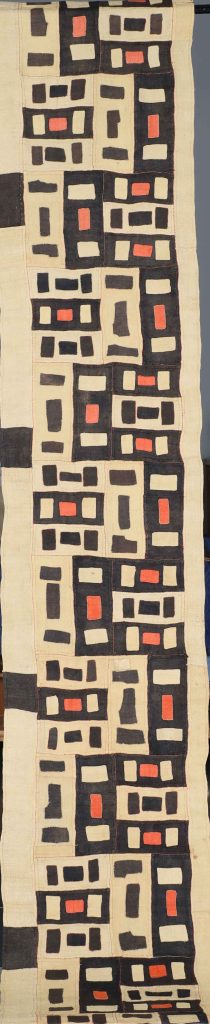
U.S. Embassy Nairobi, Kenya
African Kuba textiles are a type of traditional textile art created by the Kuba people of Central Africa, primarily from the Democratic Republic of the Congo. Made from naturally died raffia palm fibers, Kuba textiles are then handwoven, typically by Kuba women, into long, finely woven panels of geometric patterns and abstract designs.
The textiles are not only distinctive and decorative but also convey symbolic meanings and cultural stories of specific clans, events or individuals within the community. Panels are often sewn together to be fashioned into clothing, wall hangings, or ceremonial pieces.
These pieces were selected and purchased for the new embassy building in Nairobi, Kenya in 2003.
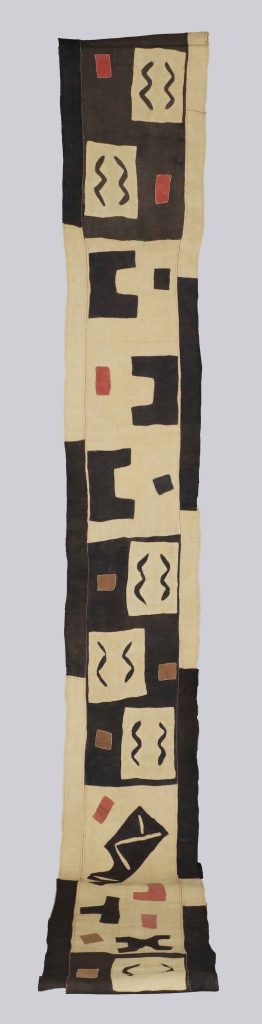
U.S. Embassy Nairobi, Kenya
African Kuba textiles are a type of traditional textile art created by the Kuba people of Central Africa, primarily from the Democratic Republic of the Congo. Made from naturally died raffia palm fibers, Kuba textiles are then handwoven, typically by Kuba women, into long, finely woven panels of geometric patterns and abstract designs.
The textiles are not only distinctive and decorative but also convey symbolic meanings and cultural stories of specific clans, events or individuals within the community. Panels are often sewn together to be fashioned into clothing, wall hangings, or ceremonial pieces.
These pieces were selected and purchased for the new embassy building in Nairobi, Kenya in 2003.
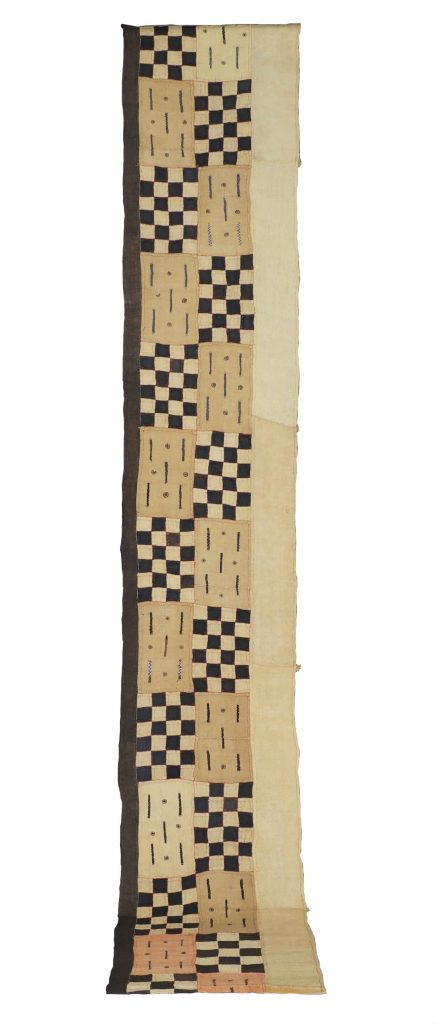
U.S. Embassy Nairobi, Kenya
African Kuba textiles are a type of traditional textile art created by the Kuba people of Central Africa, primarily from the Democratic Republic of the Congo. Made from naturally died raffia palm fibers, Kuba textiles are then handwoven, typically by Kuba women, into long, finely woven panels of geometric patterns and abstract designs.
The textiles are not only distinctive and decorative but also convey symbolic meanings and cultural stories of specific clans, events or individuals within the community. Panels are often sewn together to be fashioned into clothing, wall hangings, or ceremonial pieces.
These pieces were selected and purchased for the new embassy building in Nairobi, Kenya in 2003.
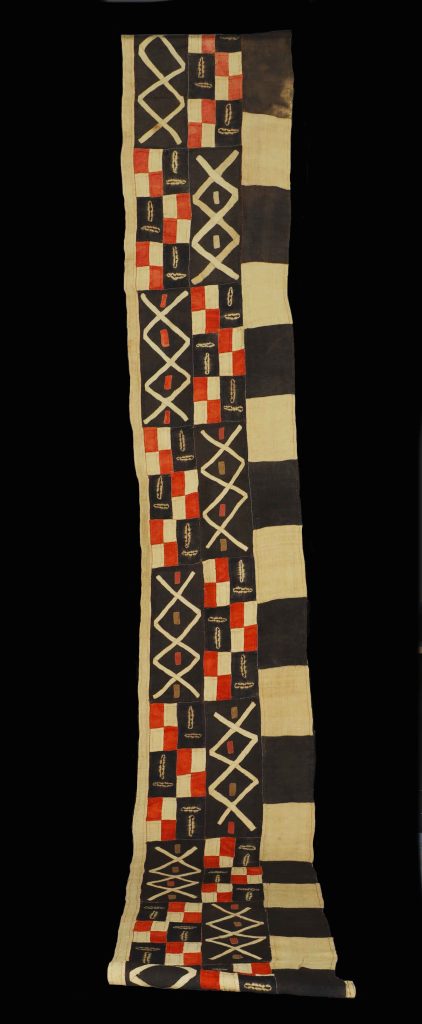
U.S. Embassy Nairobi, Kenya
African Kuba textiles are a type of traditional textile art created by the Kuba people of Central Africa, primarily from the Democratic Republic of the Congo. Made from naturally died raffia palm fibers, Kuba textiles are then handwoven, typically by Kuba women, into long, finely woven panels of geometric patterns and abstract designs.
The textiles are not only distinctive and decorative but also convey symbolic meanings and cultural stories of specific clans, events or individuals within the community. Panels are often sewn together to be fashioned into clothing, wall hangings, or ceremonial pieces.
These pieces were selected and purchased for the new embassy building in Nairobi, Kenya in 2003.
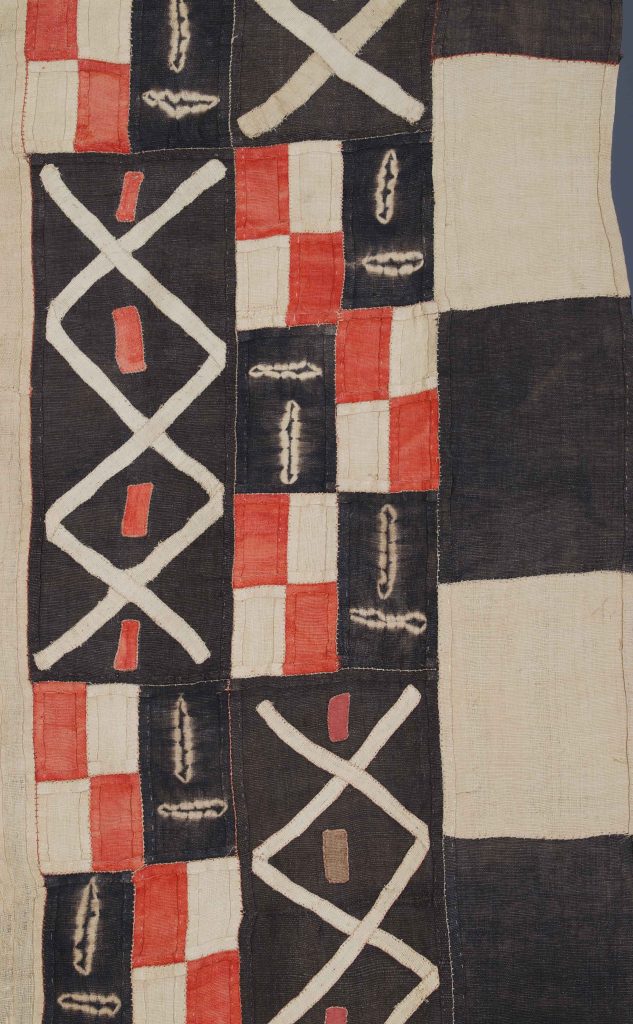
U.S. Embassy Nairobi, Kenya
African Kuba textiles are a type of traditional textile art created by the Kuba people of Central Africa, primarily from the Democratic Republic of the Congo. Made from naturally died raffia palm fibers, Kuba textiles are then handwoven, typically by Kuba women, into long, finely woven panels of geometric patterns and abstract designs.
The textiles are not only distinctive and decorative but also convey symbolic meanings and cultural stories of specific clans, events or individuals within the community. Panels are often sewn together to be fashioned into clothing, wall hangings, or ceremonial pieces.
These pieces were selected and purchased for the new embassy building in Nairobi, Kenya in 2003.
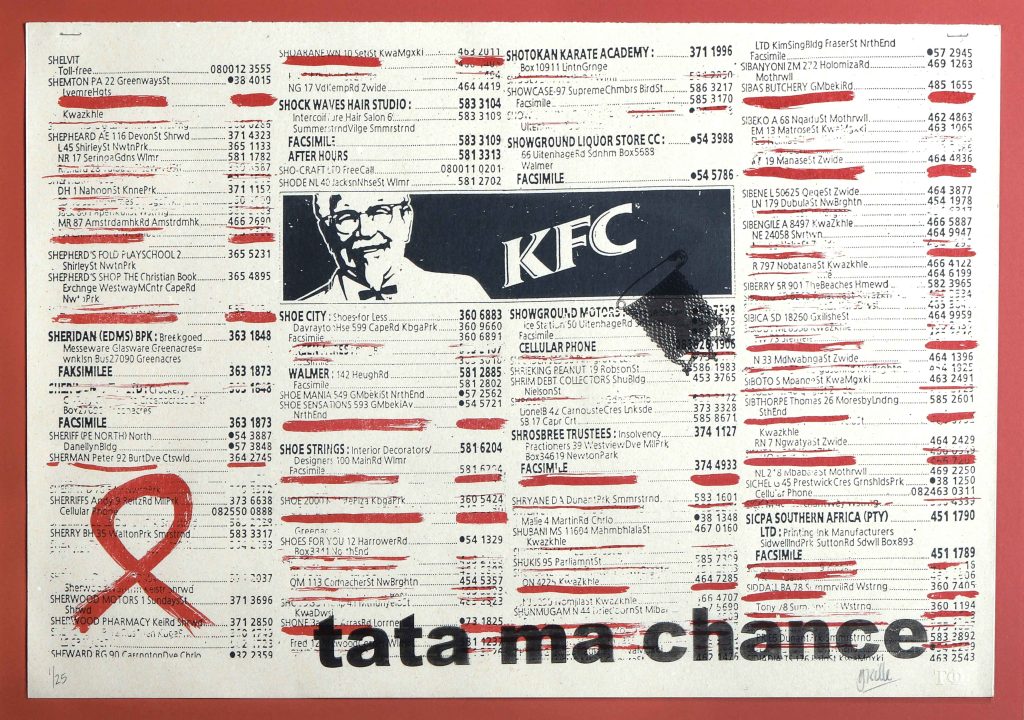
U.S. Consulate General, Durban, South Africa
Giselle Katherine Baillie
South African, born 1971
Giselle Baillie is an artist known for her work in printmaking, video, and film, often exploring themes of identity and liberation, with pieces held by MoMA and featured in South African art projects. She focuses on community through art and film, and is connected with Nelson Mandela University in Port Elizabeth, South Africa.
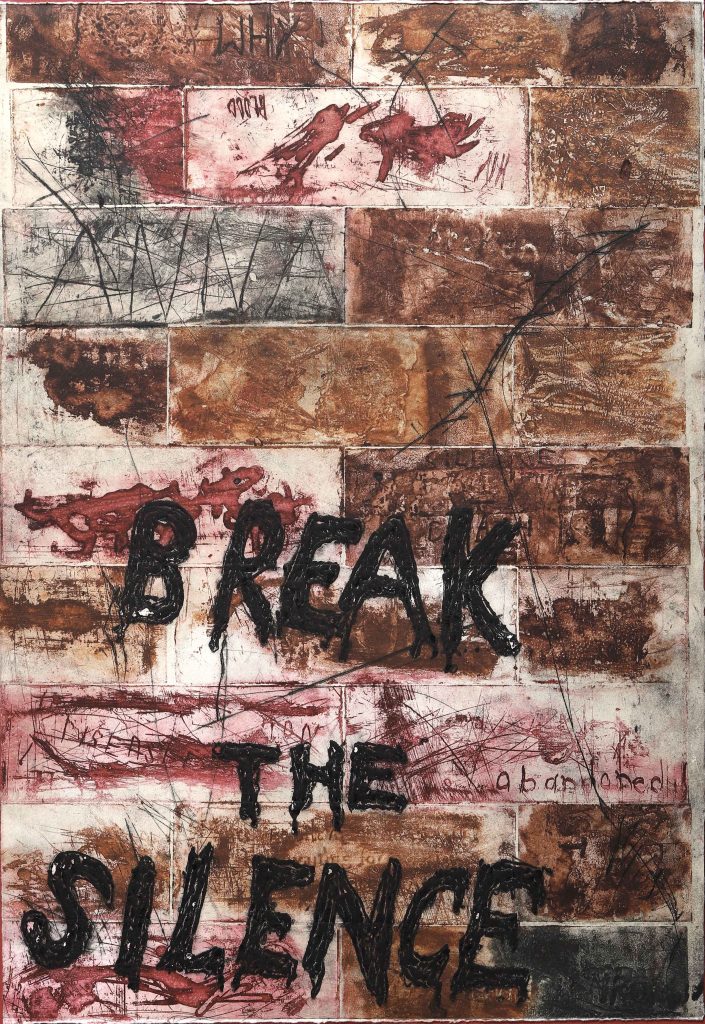
U.S. Consulate General, Durban, South Africa
Kim Berman
South African, born 1960
Kim Berman is a Professor of Visual Art at the University of Johannesburg. She serves as the Executive Director of The Artist Proof Studio in Newtown, Johannesburg. Using printmaking to reflect on social and political processes, she seeks to transform neglected, peripheral landscapes into beautiful, poignant images symbolizing society’s capacity for positive transformation.
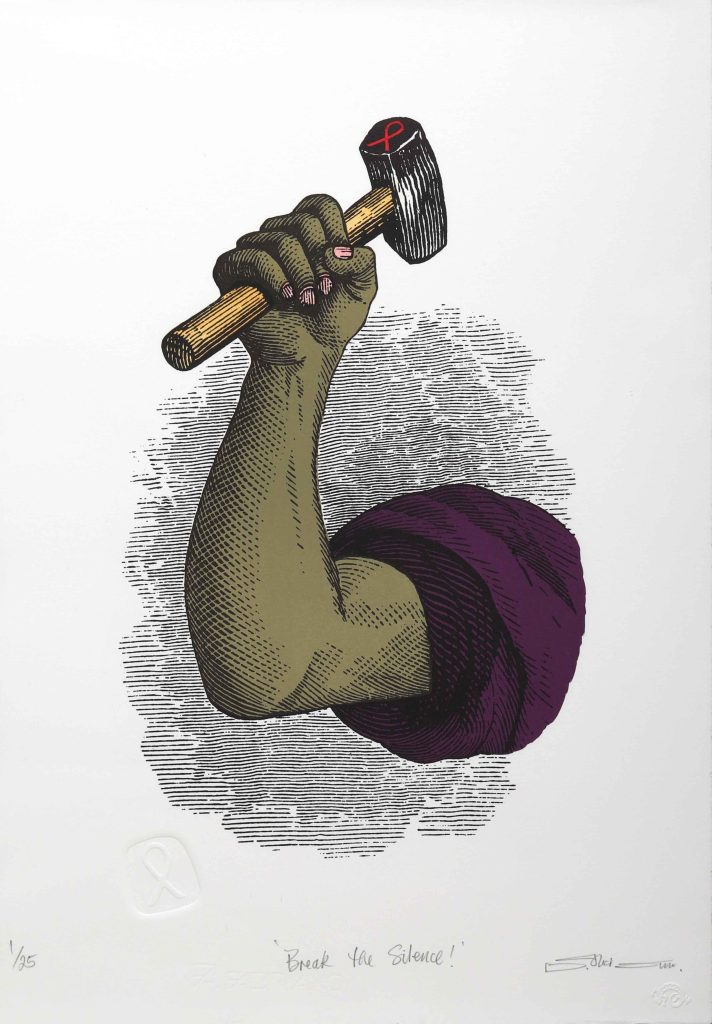
U.S. Consulate General, Durban, South Africa
Dominic Thorburn
South African, born 1958
Dominic Thorburn was born in Rondebosch, Cape Town and received a Master of Fine Art Degree from Rhodes University in South Africa before training as a printer at the Tamarind Institute at the University of New Mexico in the United States. He has received numerous grants and awards, and his work has been exhibited widely in South Africa and abroad. He serves as a professor of print media at Rhodes University’s Department of Fine Art.
Activists at the Durban University of Technology in Durban, South Africa launched an Art for Humanity billboard campaign called Break the Silence! in the early 2000s to fight the HIV/AIDs stigma in South Africa. The campaign produced more than 30 public artworks, starting in Durban and then expanding throughout the country. The works were later printed on a smaller scale for interior display and exhibition. Museums around the world, including MOMA in New York City, count prints from this project as part of their permanent collections. The U.S. Consulate General in Durban, South Africa, displays a near-complete set from this public health and social awareness campaign.
Art for Humanity is a volunteer, non-profit organization founded in the United States and dedicated to making art public, accessible, and relevant by using multidisciplinary arts for social justice and human rights advocacy around the world. The Art for Humanity movement in South Africa was inspired by the murder of activist and volunteer Gugu Dlamini, who was killed by her neighbors after revealing in a radio interview on World Aids Day in December 1998 that she was HIV positive.

OUR NON-PROFIT PARTNER
The Fund to Conserve was established, in 2012, as a 501(c)(3), independent, non-profit, nonpartisan private sector partner to the U.S. Department of State, Overseas Buildings Operations, Office of Cultural Heritage. The purpose of this public-private partnership is to fund – through philanthropic giving – the conservation and preservation of the Department of State’s many properties of cultural and architectural significance, and the heritage collections they house.