Honoring Ancient Traditions
Marks of Friendship: 250 Years of U.S. Diplomatic Treasures
“This is going to be the Pacific century … we are a Pacific nation, America. We’ve got a lot of incredibly important ties with China and Japan, Korea, the Philippines; all the nations … and the Asian Pacific Americans of our country make those ties incredibly important.”
—President George W. Bush May 17, 2002
To secure its prosperity as a young nation, America built trading partnerships with some of the world’s oldest civilizations. Economic trade with India and China reached American shores as early as the late 1700s on ships filled with tea, porcelain, silks, and other luxury goods. Cultural influences from many Asian nations also took root in American consciousness.
This early exchange of commodities and traditions helped shape the development of many aspects of American life. Today, art, design, music, technology, and well-being often show inspiration from Asian materials, techniques, and customs.
American diplomacy has benefitted from nearly 250 years of these exchanges. Many diplomatic properties showcase historic Asian furnishings and decorative arts alongside pieces of fine American craftsmanship. Some were acquired with historic properties while others were accepted as diplomatic gifts. The State Department recognizes the importance of preserving these diplomatic treasures as tangible tools of cultural diplomacy, and as a gesture of mutual respect.
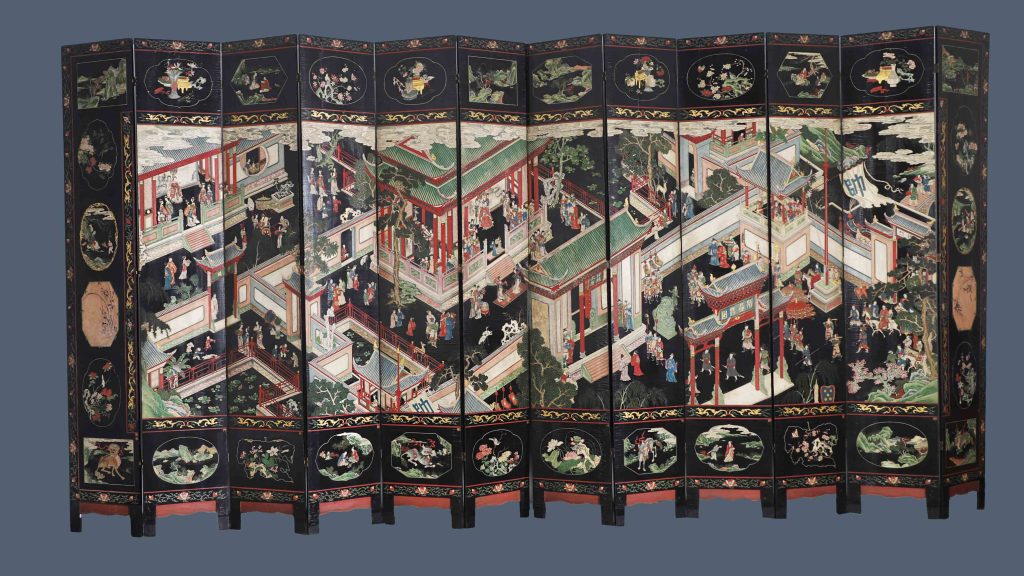
U.S. Embassy Brussels, Belgium
This elaborate, oversized wall screen, depicts an imperial tableau from the prosperous “long” reign of the Kangxi Emperor (1661–1722). Within a grand palace, people move about as merchants peddle wares, children play, and musicians serenade. Gifts and offerings are presented to the Lord and his lady. The reverse encloses panels of silk with gilded calligraphy.
The screen was made using the ancient Chinese kuan kai (literally “incised colors”) lacquer technique that was first developed in the ancient Song Dynasty, then revived and adapted for the European export trade beginning in the late 16th century, Given their size and grandeur, Coromandel screens are often displayed in an entrance hall or to divide large rooms.
Coromandel refers to the Coromandel Coast of south-east India, from which such works were exported to Europe by the Dutch East Indies Company and by its rivals from other European companies who had bases there.
This 18th century piece is displayed in the Ducale Room at the U.S. Ambassador’s residence in Brussels, Belgium.
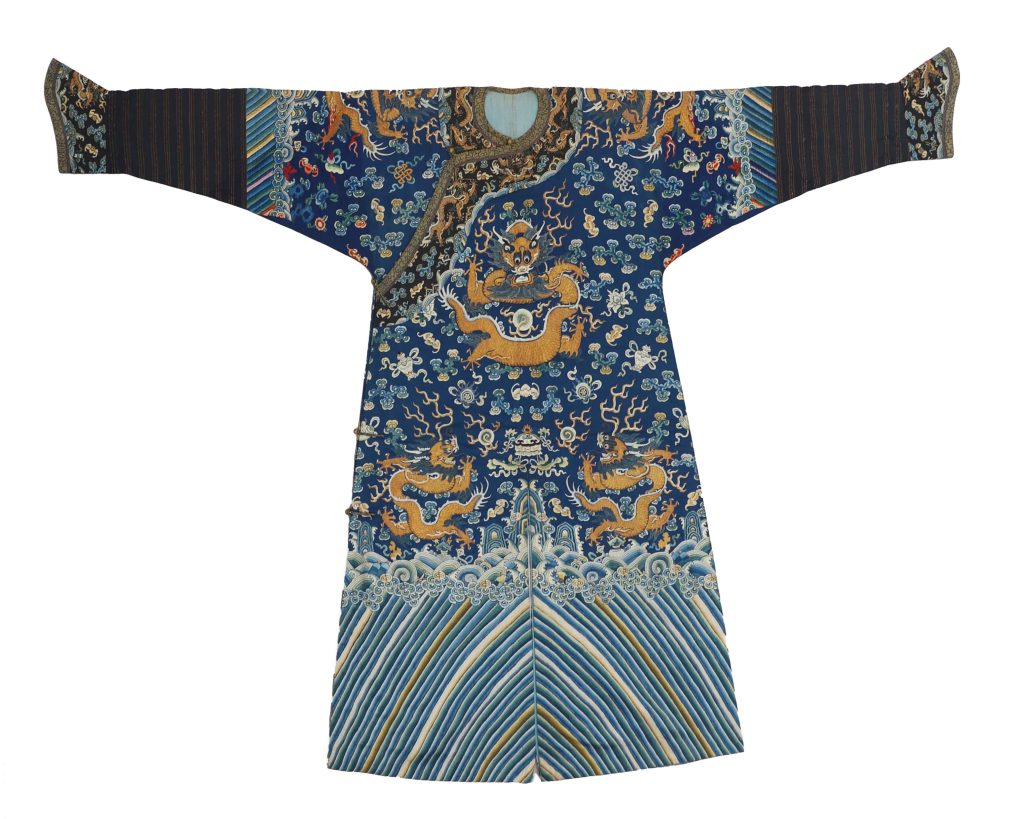
U.S. Consulate General, Hong & Kong & Macau
At first glance, a Chinese imperial dragon robe looks just as it is named – a robe adorned with dragon designs. But there was a complex system dictating each robe’s colors, designs, and features that would be indecipherable without an instruction manual. The Qing dynasty, in particular, took the dragon robe to a level of complexity unrivalled in the history of China.
In the imperial court of the Qing dynasty (1639- 1913), the right to wear a dragon robe and its accessories was conferred by rank and entitlement. Robes prominently featured an intricately embroidered dragon, but small details such as the shade of silk, added symbols, and even the number of claws on the dragon’s feet indicated an official’s role, rank, and relation to the emperor.
This robe features nine dragons embroidered on a blue silk background representing the universe. The foundational curled designs depict clouds and waves, while the dragons and imperial symbols are central and vibrant.
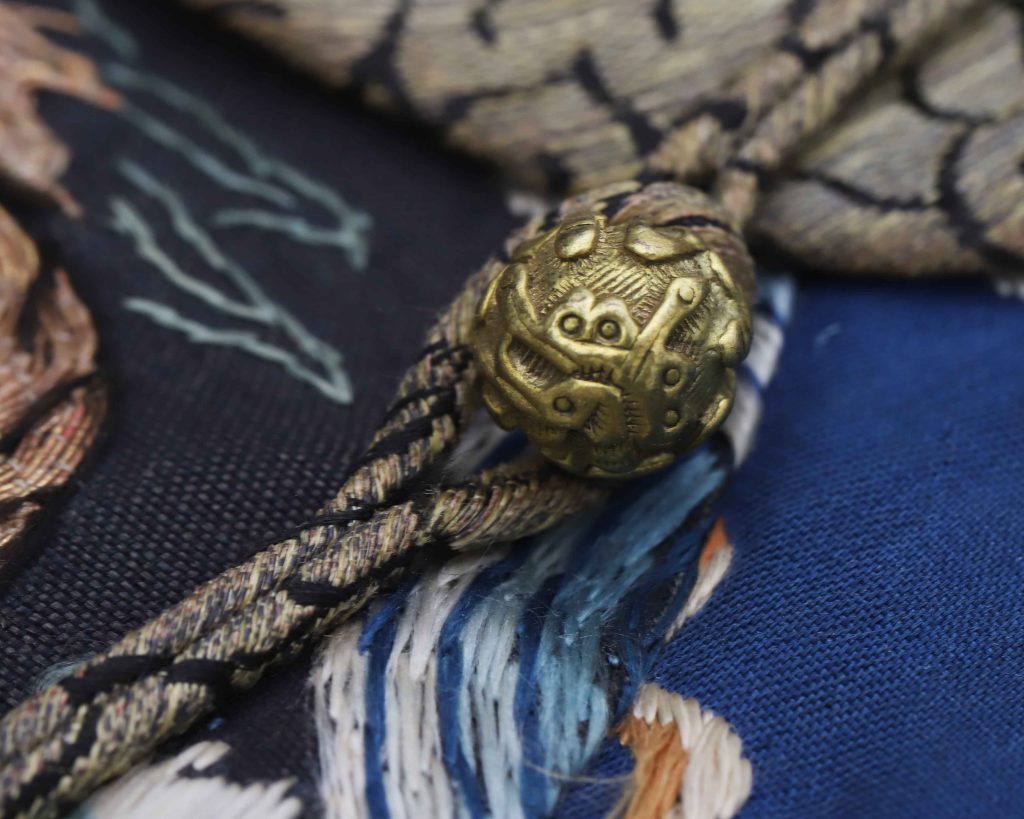
U.S. Consulate General, Hong & Kong & Macau
At first glance, a Chinese imperial dragon robe looks just as it is named – a robe adorned with dragon designs. But there was a complex system dictating each robe’s colors, designs, and features that would be indecipherable without an instruction manual. The Qing dynasty, in particular, took the dragon robe to a level of complexity unrivalled in the history of China.
In the imperial court of the Qing dynasty (1639- 1913), the right to wear a dragon robe and its accessories was conferred by rank and entitlement. Robes prominently featured an intricately embroidered dragon, but small details such as the shade of silk, added symbols, and even the number of claws on the dragon’s feet indicated an official’s role, rank, and relation to the emperor.
This robe features nine dragons embroidered on a blue silk background representing the universe. The foundational curled designs depict clouds and waves, while the dragons and imperial symbols are central and vibrant.
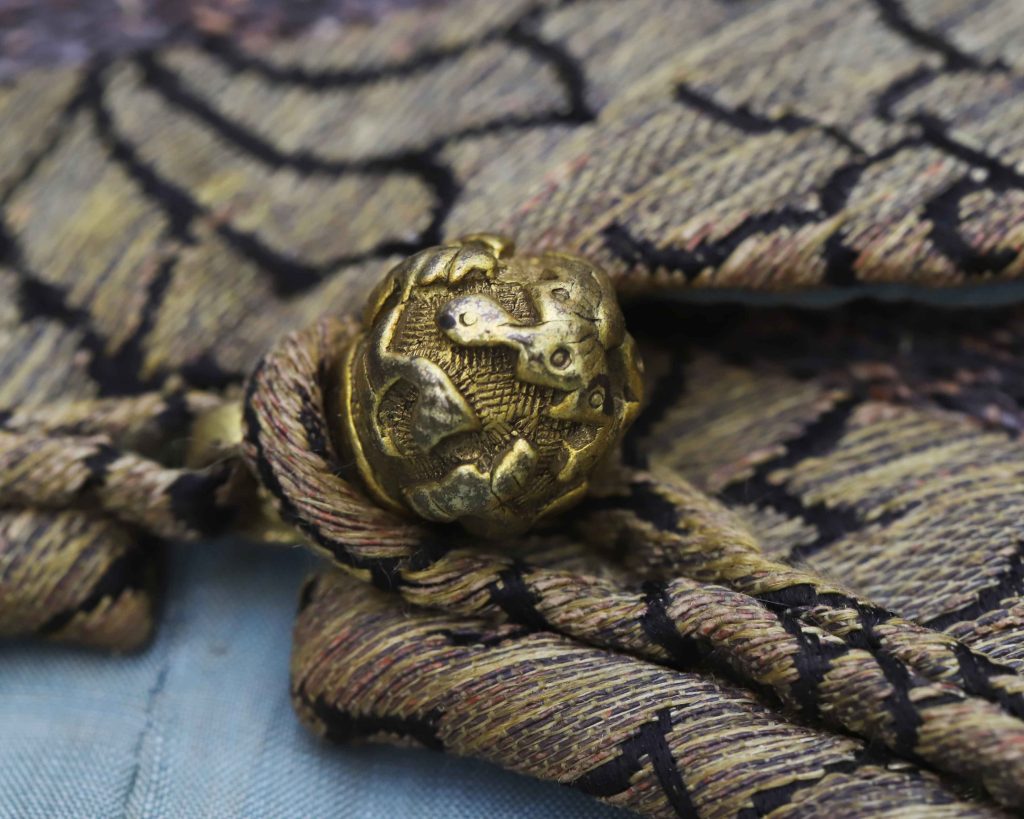
U.S. Consulate General, Hong & Kong & Macau
At first glance, a Chinese imperial dragon robe looks just as it is named – a robe adorned with dragon designs. But there was a complex system dictating each robe’s colors, designs, and features that would be indecipherable without an instruction manual. The Qing dynasty, in particular, took the dragon robe to a level of complexity unrivalled in the history of China.
In the imperial court of the Qing dynasty (1639- 1913), the right to wear a dragon robe and its accessories was conferred by rank and entitlement. Robes prominently featured an intricately embroidered dragon, but small details such as the shade of silk, added symbols, and even the number of claws on the dragon’s feet indicated an official’s role, rank, and relation to the emperor.
This robe features nine dragons embroidered on a blue silk background representing the universe. The foundational curled designs depict clouds and waves, while the dragons and imperial symbols are central and vibrant.
U.S. Consulate General, Hong & Kong & Macau
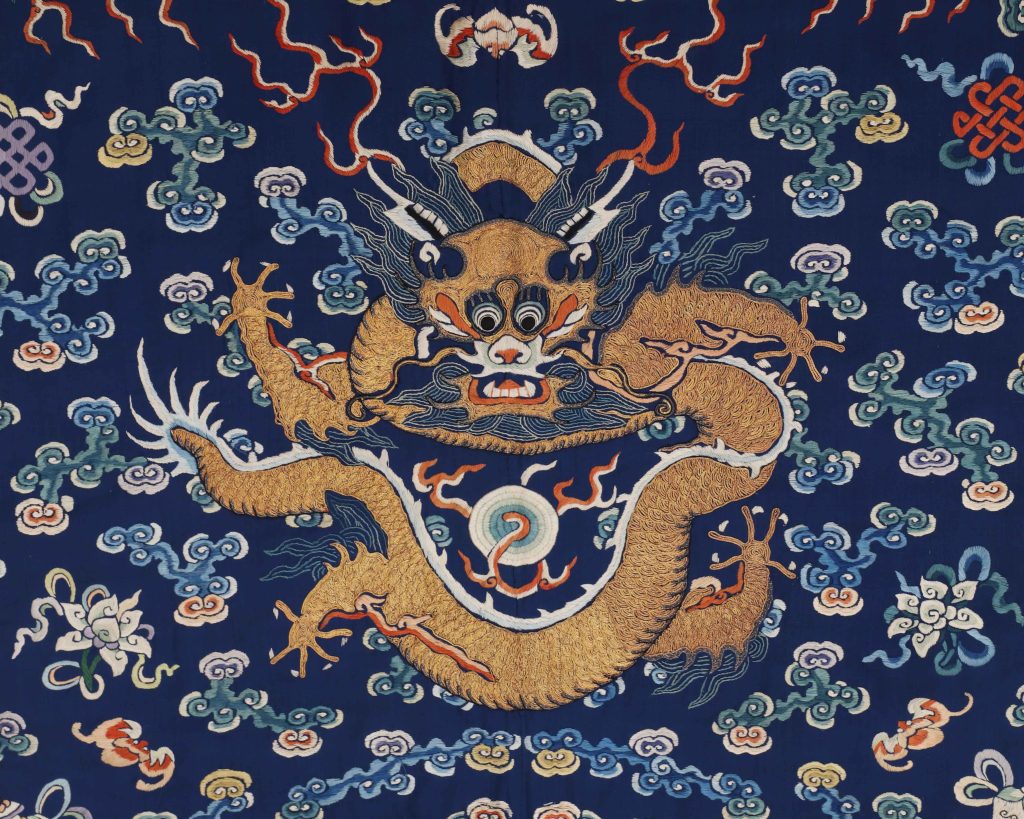
At first glance, a Chinese imperial dragon robe looks just as it is named – a robe adorned with dragon designs. But there was a complex system dictating each robe’s colors, designs, and features that would be indecipherable without an instruction manual. The Qing dynasty, in particular, took the dragon robe to a level of complexity unrivalled in the history of China.
In the imperial court of the Qing dynasty (1639- 1913), the right to wear a dragon robe and its accessories was conferred by rank and entitlement. Robes prominently featured an intricately embroidered dragon, but small details such as the shade of silk, added symbols, and even the number of claws on the dragon’s feet indicated an official’s role, rank, and relation to the emperor.
This robe features nine dragons embroidered on a blue silk background representing the universe. The foundational curled designs depict clouds and waves, while the dragons and imperial symbols are central and vibrant.
U.S. Embassy Jakarta, Indonesia
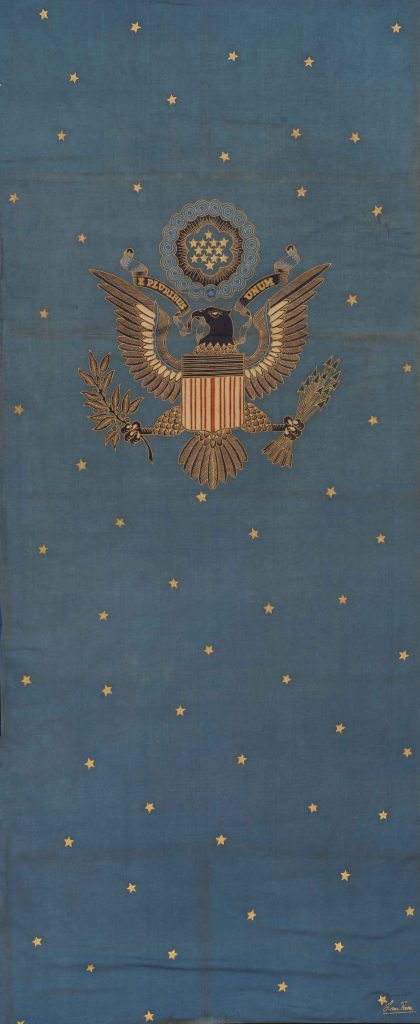
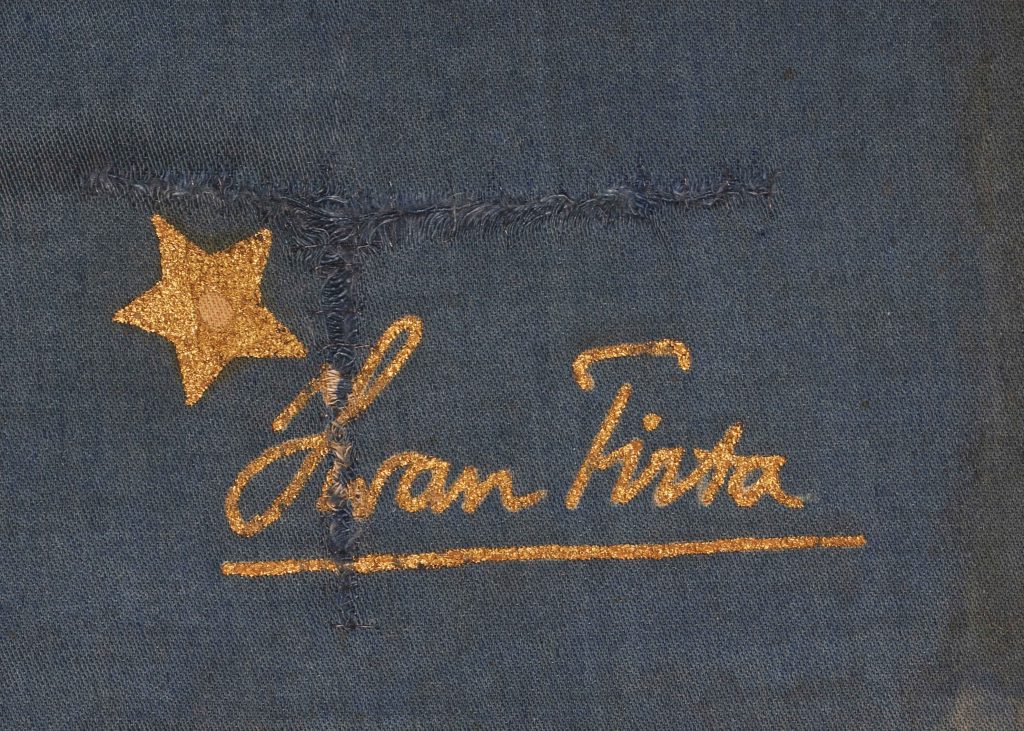
Iwan Tirta
Indonesian, 1935 – 2010
Batik is a traditional wax-resist dyeing technique used to create intricate patterns on fabric, most famously developed in Java, Indonesia, where it is a cultural symbol.
Iwan Tirta was an Indonesian fashion designer who trained as a lawyer, studying at Yale University and working at the United Nations before devoting his life to batik design. He became a master of handmade batik art and fashion and, later in life, an advocate for Indonesian and Javanese culture.
He designed the batik shirts worn by President Ronald Reagan on May 1, 1986, at an Association for Southeast Asian Nations (ASEAN) dinner on the island of Bali, Indonesia, and by President Bill Clinton and other world leaders at the 1994 Asia-Pacific Economic Cooperation (APEC) dinner in Bogor, Indonesia.
U.S. Embassy Jakarta, Indonesia
Iwan Tirta
Indonesian, 1935 – 2010
Batik is a traditional wax-resist dyeing technique used to create intricate patterns on fabric, most famously developed in Java, Indonesia, where it is a cultural symbol.
Iwan Tirta was an Indonesian fashion designer who trained as a lawyer, studying at Yale University and working at the United Nations before devoting his life to batik design. He became a master of handmade batik art and fashion and, later in life, an advocate for Indonesian and Javanese culture.
He designed the batik shirts worn by President Ronald Reagan on May 1, 1986, at an Association for Southeast Asian Nations (ASEAN) dinner on the island of Bali, Indonesia, and by President Bill Clinton and other world leaders at the 1994 Asia-Pacific Economic Cooperation (APEC) dinner in Bogor, Indonesia.

OUR NON-PROFIT PARTNER
The Fund to Conserve was established, in 2012, as a 501(c)(3), independent, non-profit, nonpartisan private sector partner to the U.S. Department of State, Overseas Buildings Operations, Office of Cultural Heritage. The purpose of this public-private partnership is to fund – through philanthropic giving – the conservation and preservation of the Department of State’s many properties of cultural and architectural significance, and the heritage collections they house.